The selection of vehicle models and configurations generally needs to start from the following aspects:
(1) Operation function
The basic operational functions of forklifts are divided into horizontal handling, stacking/picking, loading and unloading, and picking. Through the vehicle models introduced above, the operational functions that the enterprise intends to achieve can be initially determined. In addition, special operation functions can also affect the specific configuration of forklifts. For instance, if a forklift is used to transport paper rolls, molten iron, etc., accessories need to be installed on the forklift to fulfill special functions.
(2) Assignment Requirements
The operation requirements for forklifts include general requirements such as the specifications of pallets or goods, lifting height, width of operation channels, and slope of climbing. At the same time, requirements such as operational efficiency (which varies among different models) and operational habits (such as whether one prefers to sit or stand) also need to be taken into consideration.
(3) Working environment
If the goods transported by an enterprise or the warehouse environment have requirements for environmental protection aspects such as noise or exhaust emissions, these factors should be taken into consideration when choosing the vehicle model and configuration. If it is in a cold storage or an environment with explosion-proof requirements, the configuration of the forklift should also be cold storage type or explosion-proof type. Carefully inspect the positions that the forklift needs to pass through during operation and consider possible problems, such as whether the height of the door when entering and leaving the warehouse has an impact on the forklift. The influence of elevator height and load capacity on the entry and exit of forklifts in elevators; When working upstairs, whether the floor load-bearing capacity meets the corresponding requirements, etc.
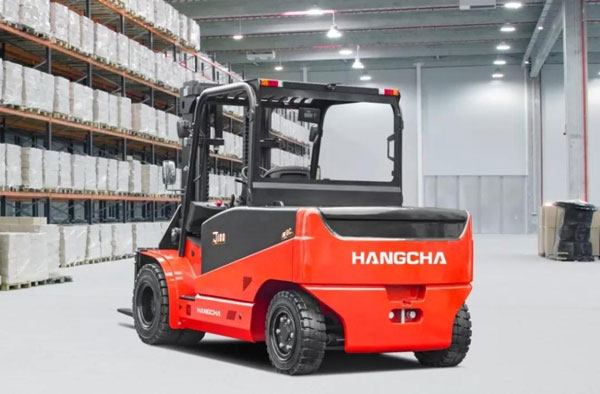
When choosing the model and determining the configuration, it is necessary to provide a detailed description of the working conditions to the forklift supplier and conduct on-site research to ensure that the purchased forklifts fully meet the needs of the enterprise. Even after the analysis of the above steps is completed, it is still possible that multiple vehicle models simultaneously meet the above requirements. At this point, the following aspects need to be noted
Different vehicle models have different working efficiencies, so the number of forklifts and drivers required also varies, which will lead to a series of cost changes. For detailed information, please refer to the discussion on cost in the performance evaluation section of this article.
If forklifts are operating in the warehouse, different models have different requirements for the width of the aisles and different lifting capacities, which will lead to changes in the warehouse layout, such as variations in the amount of goods stored.
③ Changes in vehicle models and quantities will have an impact on many aspects such as fleet management.
The market share and after-sales support capabilities of different vehicle models vary. For instance, both low-position and high-position three-way stackers belong to the narrow-aisle forklift series and can complete the stacking and picking of goods within very narrow aisles (1.5 to 2.0 meters). However, the cab of the former cannot be lifted, resulting in poor operating visibility and lower work efficiency. As the latter can fully cover the functions of the former and has more outstanding performance, its market sales volume in Europe is 4 to 5 times that of the former, and in China, it is even more than 6 times. Therefore, most suppliers focus on developing high-distance three-way stackers, while low-distance three-way stackers are only used for small tonnage and low lifting height (generally within 6 meters) conditions. When the market sales volume is very low, the number of after-sales service engineers, their experience, the inventory level of spare parts and other service capabilities will all be relatively weak. After a comprehensive assessment of the influences of all the above aspects, a reasonable plan should be selected.
Tianxing Forklift Machinery Co., Ltd. acts as an agent for forklifts in Hangzhou, providing comprehensive services including the full range of forklifts in Hangzhou, selection of warehouse equipment, trade-in for complete machines, parts for forklifts of various brands, after-sales maintenance services for forklifts, and selection of second-hand forklifts.